Radar Water Level Sensor: How It Works and Where It Is Used
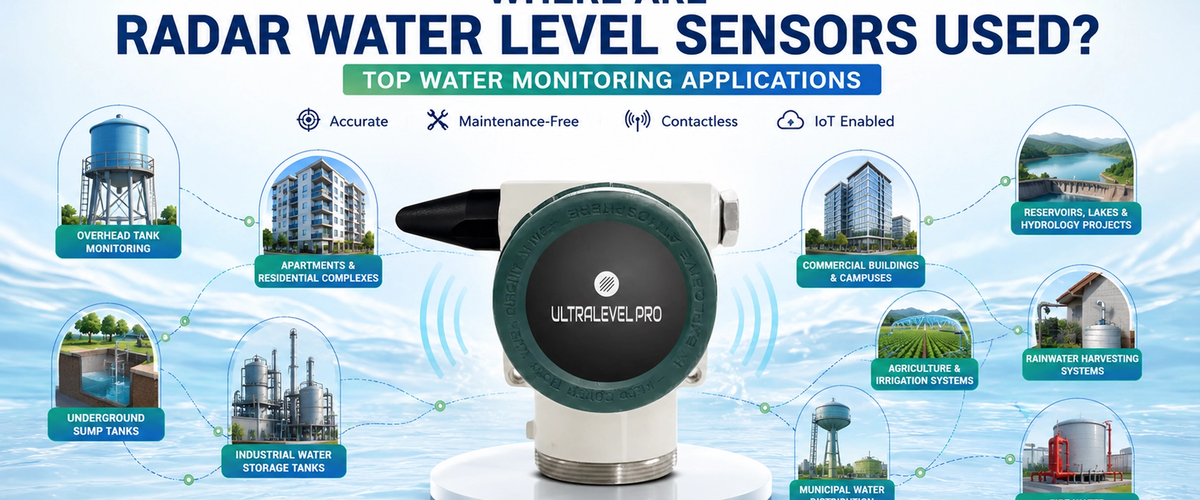
wireless radar level sensor applications
A radar water level sensor is a non-contact level measurement device that uses electromagnetic waves to measure the distance between the sensor and the surface of the water.
Because the sensor does not need to physically touch the liquid, radar technology can be useful for water tanks, underground sumps, reservoirs, industrial storage tanks and other applications where continuous level monitoring is required.
When connected to an IoT monitoring system, a radar water level sensor can do more than measure a tank. It can transmit level data to a cloud or mobile dashboard, generate alerts and provide input for automatic pump control.
This makes radar level sensing an important component of modern water tank monitoring systems, particularly where remote monitoring, low maintenance and multi-tank visibility are required.
In this guide, we explain how radar water level sensors work, where they are used, how they compare with other level-sensing technologies and how they can be integrated into smart water management systems.
Why Radar Water Level Sensors Are Becoming the Industry Standard
Modern facilities demand continuous monitoring with minimal maintenance.
Radar technology offers several advantages:
- Contactless water level measurement
- Solar-powered, self-energy harvesting
- High accuracy regardless of water quality
- Works in humid, dusty, or enclosed environments
- No moving parts to fail
- Suitable for tanks of various sizes
- Easily integrates with IoT monitoring platforms
- Supports remote monitoring through LoRa, 4G, NB-IoT, or Wi-Fi connectivity
These benefits make radar sensors suitable for far more than just overhead water tanks.
How Does a Radar Water Level Sensor Work?
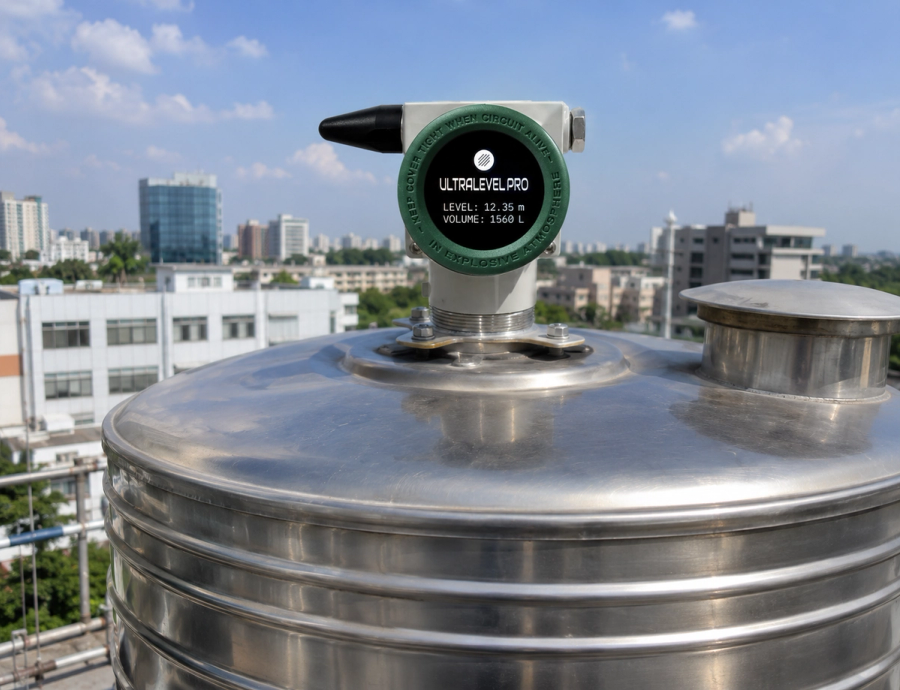
A radar level sensor is installed above the liquid surface. The sensor transmits electromagnetic waves toward the water and receives the reflected signal from the surface.
The system uses the returned signal to determine the distance between the sensor and the water surface.
If the sensor installation height is known, the measured distance can be converted into the water level inside the tank.
The basic measurement process
Radar signal → Reflection from water surface → Distance measurement → Water level calculation → Monitoring platform
Because the sensing element does not need to contact the water, radar level measurement can reduce issues associated with mechanical or submerged components.
For smart water monitoring, the measured level can then be transmitted through a suitable communication interface or wireless network to a dashboard, controller or cloud platform.
Overhead Water Tank Monitoring
One of the most common applications is overhead tank (OHT) monitoring.
Residential apartments, commercial buildings, hospitals, hotels, educational institutions, and factories rely on overhead tanks for daily water supply.
Without continuous monitoring, operators often face:
- Water overflow
- Dry tanks
- Manual level checking
- Pump running unnecessarily
- Water shortages
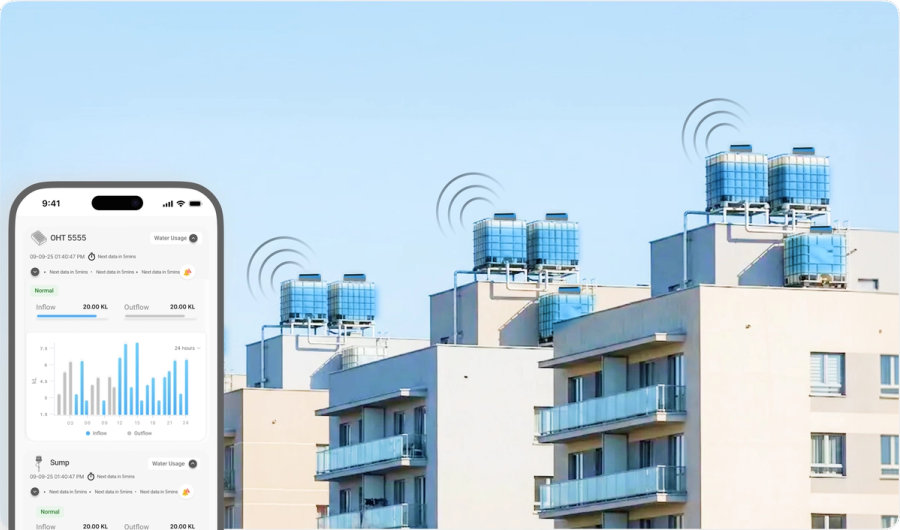
A wireless radar water level sensor continuously measures tank levels and sends live data to a mobile app or cloud dashboard.
Combined with automatic pump control, the system starts or stops pumps based on actual tank levels, eliminating manual intervention
Underground Sump Tank Monitoring
Most buildings store incoming water inside underground sump tanks before pumping it to overhead tanks.
Knowing only the overhead tank level is not enough.
Sump monitoring helps:
- Prevent dry running of pumps
- Monitor available water storage
- Balance water transfer
- Improve pump efficiency
- Ensure uninterrupted water supply
Using radar or continuous level sensing with IoT connectivity provides complete visibility across both sump and overhead tanks.
Apartment Water Management
Large apartment complexes often manage multiple tanks across several blocks.
Manual monitoring becomes impossible as the number of tanks increases.
Radar sensors enable:
- Multi-tank monitoring
- Centralized dashboards
- Automatic pump scheduling
- Overflow prevention
- Water consumption insights
- Maintenance alerts
Facility managers can monitor every tank remotely without visiting rooftops.
Commercial Buildings & Corporate Campuses
Office buildings consume significant volumes of water every day.
Water is required for:
- Washrooms
- HVAC systems
- Cooling towers
- Cafeterias
- Landscaping
- Fire reserve tanks
Continuous monitoring ensures water availability while reducing operational costs.
IoT-enabled radar sensors help building management systems optimize water usage without manual inspections.
Industrial Water Storage Tank Monitoring
Industries depend on water for manufacturing, cooling, cleaning, and processing.
Examples include:
- Food processing
- Pharmaceutical manufacturing
- Chemical plants
- Textile industries
- Cement plants
- Automotive manufacturing
Radar water level sensor provide accurate monitoring even in demanding industrial environments where traditional float switches require frequent maintenance.
Real-time monitoring helps avoid production interruptions caused by insufficient water storage.
Municipal Water Distribution
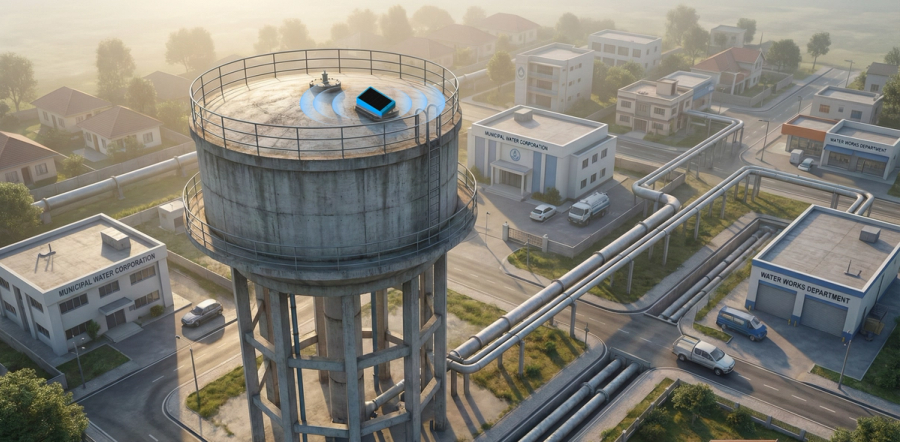
Municipal corporations operate hundreds of water storage tanks across cities.
Managing these assets manually is expensive and inefficient.
Radar-based monitoring enables municipalities to:
- Monitor reservoir levels remotely
- Optimize pumping schedules
- Reduce water losses
- Improve distribution planning
- Detect abnormal consumption
- Maintain uninterrupted public water supply
Cloud-based dashboards provide centralized visibility across the entire water distribution network.
Agriculture & Irrigation Systems
Agriculture depends heavily on efficient water management.
Radar level sensors are widely used in:
- Irrigation tanks
- Farm reservoirs
- Borewell storage
- Rainwater harvesting systems
- Water distribution tanks
Farmers and irrigation managers can monitor water availability remotely and automate pumping based on actual storage levels.
This reduces unnecessary pumping and conserves groundwater.
Rainwater Harvesting System Monitoring
Rainwater harvesting systems are becoming essential in urban infrastructure.
Monitoring harvested water manually often leads to underutilization.
Radar sensors help monitor:
- Storage capacity
- Available water
- Overflow conditions
- Seasonal water availability
The collected data supports better water reuse and conservation planning.
Fire Water Storage Tank Monitoring
Fire reserve tanks must remain ready at all times.
Manual inspection is risky because water levels can change unexpectedly.
Continuous radar monitoring helps facility managers ensure:
- Required storage levels
- Instant low-level alerts
- Compliance with safety standards
- Reliable emergency preparedness
Since radar sensors never contact the water, they require very little maintenance over long operating periods.
Reservoirs, Lakes & Hydrology Projects
Water tank level sensors are increasingly used for environmental monitoring.
Applications include:
- River level monitoring
- Reservoir monitoring
- Canal water management
- Flood warning systems
- Dam monitoring
- Watershed management
Because radar performs reliably in changing weather conditions, it is well suited for long-term outdoor deployments
Why Wireless Radar Water Level Sensors Are Replacing Traditional Sensors
Older technologies like float switches and conductive probes often suffer from:
- Corrosion
- Scaling
- Cable failures
- Limited measurement points
- Mechanical wear
- Frequent maintenance
Modern wireless radar level sensors with LoRa eliminate these issues.
Long-range wireless communication enables sensors installed on rooftops, reservoirs, or remote sites to transmit real-time data over several kilometers without extensive cabling, reducing installation complexity and maintenance costs.
How My Tank Simplifies Smart Water Monitoring
As water infrastructure becomes larger and more distributed, monitoring individual sensors is no longer enough. Organizations need a complete water management platform.
My Tank provides an end-to-end IoT water tank monitoring and automation system built around industrial-grade radar sensing technology.
With My Tank, you can:
- Monitor overhead and sump tanks in real time
- Use 100% wireless solar-powered radar level sensors
- Connect sensors through long-range LoRa communication (up to 5 km)
- Access tank levels from mobile and web dashboards
- Receive instant low-level, high-level, and overflow alerts
- Automate pump operations
- Monitor multiple tanks from a single dashboard
- Integrate water quality monitoring, flow meters, and automated valve control into one unified platform
Whether you're managing an apartment complex, industrial facility, municipality, educational campus, hospital, or commercial building, My Tank transforms conventional water systems into intelligent, connected infrastructure.
Final Thoughts
Radar water level sensors have evolved far beyond simple tank-level indicators. Today, they are powering intelligent water management across residential buildings, industries, municipalities, agriculture, and environmental monitoring projects.
By combining contactless radar sensing, wireless connectivity, and IoT automation, organizations gain real-time visibility, reduce water losses, optimize pump operations, and improve overall operational efficiency.
If you're planning to modernize your water infrastructure, investing in a wireless radar water level sensor integrated with a complete IoT platform like My Tank is a future-ready approach to smarter, more sustainable water management.
Frequently Asked Questions
What is a radar water level sensor?
A radar water level sensor is a non-contact device that uses electromagnetic waves to measure the distance between the sensor and the surface of a liquid.
How does a radar water level sensor measure water?
The sensor sends a radar signal toward the water surface and receives the reflected signal. The system calculates the distance to the surface and converts it into a water-level measurement.
Where are radar water level sensors used?
Radar water level sensors are used in overhead tanks, underground sumps, industrial storage tanks, commercial buildings, apartments, agricultural reservoirs, municipal water systems, rainwater harvesting tanks and other water-storage applications.
Can radar water level sensors monitor tanks remotely?
Yes. When combined with wireless connectivity and an IoT monitoring platform, radar sensors can transmit tank-level information to a remote dashboard.
What is better: radar or ultrasonic level sensing?
Neither technology is universally better. The appropriate choice depends on tank geometry, installation environment, measurement requirements, liquid conditions and the monitoring system. Radar is often selected when non-contact continuous measurement and robust remote monitoring are priorities.