How to Monitor Water Levels in Deep and Hard-to-Reach Tanks
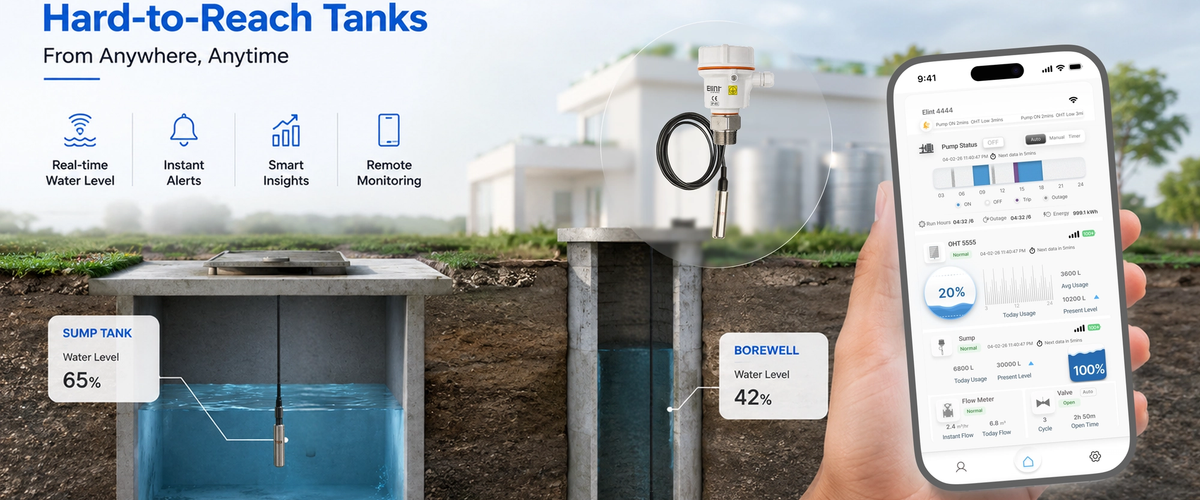
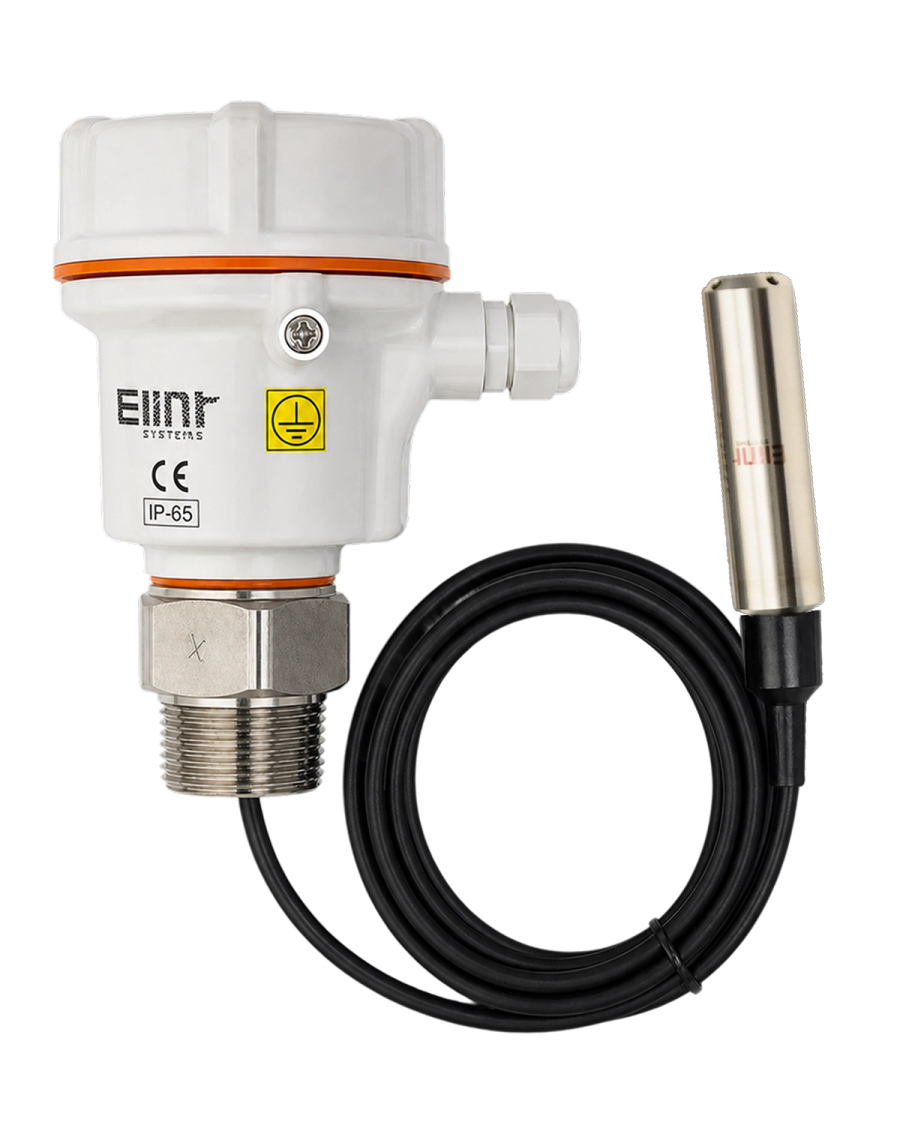
Hydrostatic sensor for remote water level monitoring in deep tanks and borewells.
Checking the water level in a deep or hard-to-reach tank can be difficult. You may need to visit the tank, open the cover, or use a manual measuring tool to find out how much water is available.
This can be a bigger problem when tanks are underground, very deep, or located far away from the people managing them.
A water tank level monitoring system can make this process easier. A sensor can measure the water level automatically and send the information to a monitoring platform. This allows you to check the tank level without visiting the tank every time.
Why Is It Difficult to Monitor Water Levels in Deep Tanks?
Some tanks are not easy to access or inspect.
For example, an underground sump may have a small opening, while an industrial tank may be located in an area that is difficult to reach. Borewells can also be too deep for simple manual checking.
Some common problems include:
- Difficult access to the tank
- Frequent manual inspections
- Difficulty seeing the water level
- Unexpected low water levels
- Tank overflow
- Pump dry run
- Time spent checking multiple tanks
- Difficulty monitoring tanks at remote locations
Manual checking also gives you information only at the time of inspection. You may not know what happens to the water level later.
This is why continuous water level monitoring can be useful.
How Can You Monitor Water Levels in Deep and Hard-to-Reach Tanks?
You can use a hydrostatic water tank level sensor to measure the amount of water in a deep or hard-to-reach tank.
The sensor continuously checks the water level and sends the information to the monitoring system.
The basic process is simple.
The sensor measures the water level
A water tank level sensor is installed at the suitable measurement point inside the tank.
Different types of sensors can be used depending on the tank and application. For deep tanks, a hydrostatic level sensor can be useful because it measures water pressure to determine the water level.
The sensor can continue measuring the level without requiring someone to manually check the tank.
The level data is transmitted
After measuring the water level, the sensor sends the information to the monitoring system.
Different communication methods can be used depending on the location and system requirements, such as 4G, LoRa, Wi-Fi, or RS485.
For a remote tank, cellular connectivity can be useful because the sensor can send information without depending on a local Wi-Fi connection.
The data reaches the tank monitoring platform
The water-level information can be sent to a cloud-based platform.
The platform receives the sensor data and makes it available for monitoring.
With an IoT Water Tank Monitoring System, users can monitor tank levels from a central platform instead of checking every tank manually.
You check the level remotely
Once the sensor is connected to the monitoring system, you can check the water level remotely.
This is useful when tanks are:
- Underground
- Very deep
- Located far away
- Difficult to access
- Spread across different locations
You can get the information without making a separate visit just to check the tank.
What Is a Hydrostatic Level Sensor and How Does It Work?
A hydrostatic level sensor measures the pressure created by the water in a tank.
As the water gets deeper, the pressure increases. The sensor detects this pressure and uses it to calculate the water level.
For example, if the water level in a sump tank increases, the pressure on the sensor also increases. The system can use this change to determine the level of water in the tank.
This makes hydrostatic sensors useful for applications where the water surface is difficult to see or measure manually.
My Tank's HydroSense is designed for continuous sump and liquid level monitoring and can be used for applications such as underground tanks, borewells, and wastewater tanks.
Can I Monitor Underground and Sump Tanks Remotely?
A suitable water level sensor can be installed in an underground or sump tank and connected to a remote monitoring system.
You can then monitor water tank levels remotely without visiting the tank every time.
This can be especially useful when:
- The tank is underground
- The tank is very deep
- The tank has limited access
- The tank is far from the control room
- Several tanks need to be monitored
- The tank is at a remote location
For example, instead of sending a worker to an underground sump every few hours, the tank level can be checked through the monitoring platform.
This can save time and reduce the need for repeated manual inspections.
Can I Receive Alerts When the Water Level Is Too Low or Too High?
A smart water monitoring system can send alerts when the water level reaches a set limit.
For example, you can receive an alert when:
- The water level is very low
- The tank is almost empty
- The water level is too high
- The tank is close to overflowing
These alerts help you know when action may be required.
You don't have to keep checking the tank throughout the day.
For buildings, factories, campuses, and other large facilities, this can make water management much easier.
Can Water Level Monitoring Prevent Tank Overflow and Pump Dry Run?
Water level monitoring can help identify high and low water levels before they become bigger problems.
For example, when the tank level becomes too high, an alert can warn you about a possible overflow.
When the water level becomes too low, you can know that there may not be enough water for the pump to operate safely.
Water-level monitoring can also be connected with an automatic water tank pump controller to help manage pump operation based on the water level.
This can help:
- Reduce water wastage
- Avoid unnecessary pump operation
- Reduce the risk of pump dry run
- Improve water management
Where Can Hydrostatic Level Sensors Be Used?
Hydrostatic level sensors can be used in different places where measuring water or liquid levels manually is difficult.
Underground water tanks
Underground tanks are difficult to inspect because the water surface cannot always be seen.
A hydrostatic sensor can continuously measure the water level.
Sump tanks
Sump tanks are commonly located below ground.
A sensor can monitor the water level without requiring regular manual checking.
Borewells
Borewells can be very deep, making manual water-level measurement difficult.
A suitable level sensor can help measure the water level and provide the information remotely.
Industrial tanks
Factories and industrial facilities may have large tanks that require regular monitoring.
Remote level monitoring can help operators check the levels without visiting every tank.
Wastewater tanks
Wastewater tanks can also require continuous level monitoring.
A suitable sensor can provide regular level information and help operators manage the tank more effectively.
How My Tank Enables Remote Water Level Monitoring
My Tank helps make water tank monitoring simple and connected.
A suitable sensor measures the water level and sends the information to the monitoring platform. Users can then check the tank level remotely.
My Tank's HydroSense is designed for continuous sump and liquid-level monitoring. It supports connectivity and integration options such as LoRa, 4G, Wi-Fi, Bluetooth, and RS485 Modbus RTU, depending on the application.
For deep and hard-to-reach tanks, this provides a more convenient way to monitor water levels without depending on frequent manual inspections.
With My Tank, users can monitor their tanks, receive important level alerts, and use water-level information to support better pump and water management.
Conclusion
Monitoring water levels in deep and hard-to-reach tanks does not have to be difficult.
A water tank level monitoring system can automatically measure the water level and provide the information remotely. With an IoT water tank monitoring system, users can get better visibility into tanks that are difficult to access.
Hydrostatic level sensors can be particularly useful for deep, underground, sump, borewell, and other liquid-level monitoring applications.
With My Tank, water tank monitoring can become simpler, more convenient, and less dependent on manual inspections.
Struggling to monitor water levels in deep or hard-to-reach tanks?
Let’s talk about your monitoring challenges and find the right solution for your tanks
Schedule a CallFrequently Asked Questions
How does a hydrostatic water level sensor work?
A hydrostatic level sensor measures the pressure created by the water above the sensor. As the water depth changes, the pressure changes, allowing the system to calculate the water level.
Can one system monitor multiple water tanks?
Yes. An IoT-based water tank monitoring platform can bring data from multiple tanks into a centralized dashboard, making it easier to monitor tanks across buildings, facilities or different locations.
Where can hydrostatic level sensors be used?
Hydrostatic level sensors can be used for underground tanks, sump tanks, borewells, industrial tanks, wastewater tanks and other deep or difficult-to-access liquid-level applications.
Can I monitor an underground water tank remotely?
Yes. A suitable level sensor can be installed in an underground tank and connected to an IoT monitoring system. This allows users to view the tank level remotely without regularly opening or inspecting the tank.
What is an IoT water tank monitoring system?
An IoT water tank monitoring system uses sensors and communication technologies to collect water-level data and transmit it to a cloud platform. Users can then remotely view tank levels, receive alerts and use the data for better water management